
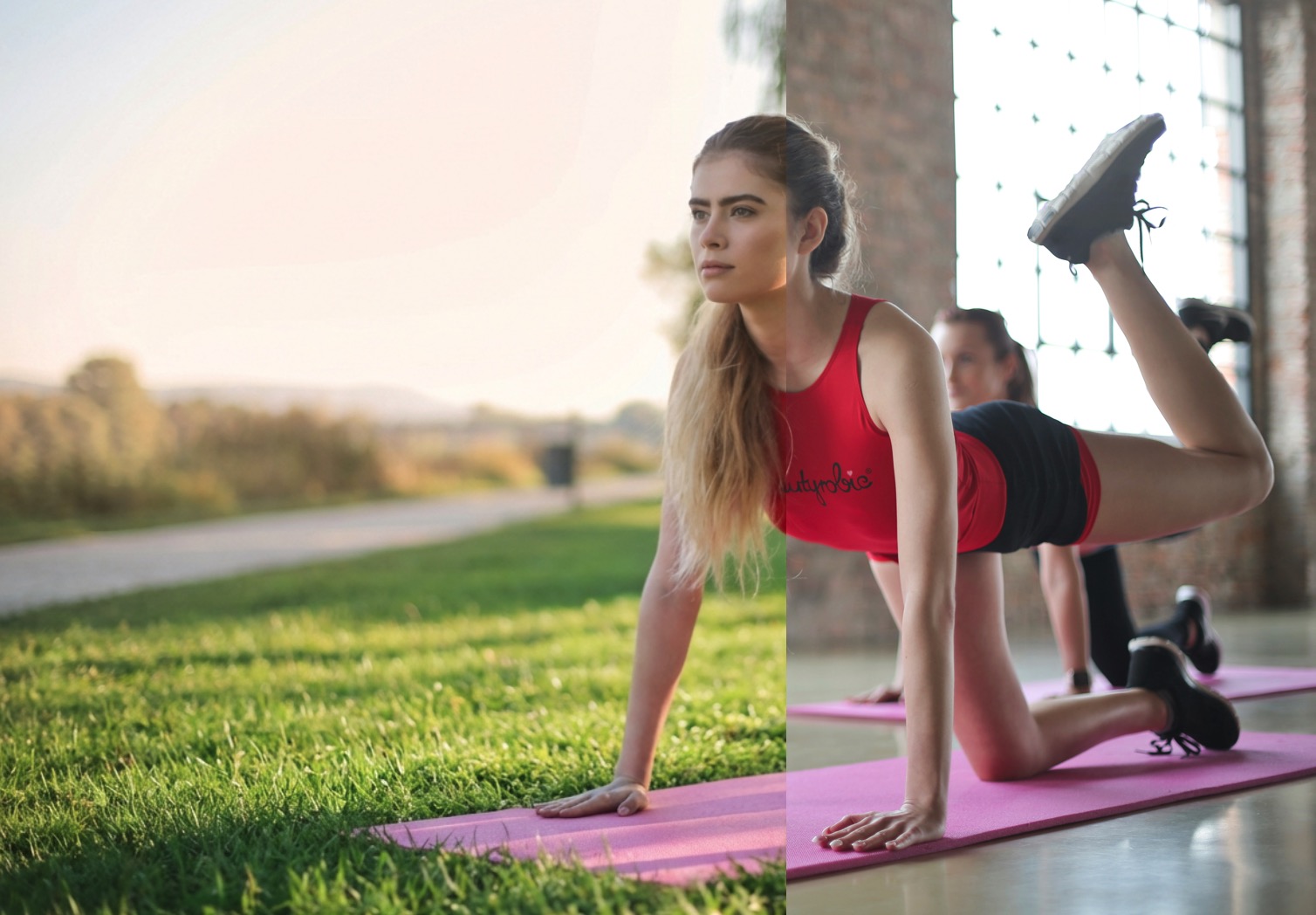
Most creative testing is slow because production is slow. You have a hypothesis — "this ad would perform better with an outdoor background" — but testing it means a new shoot, new assets, and two weeks before you have data.
By then, your winning ad is fatiguing and you've already lost revenue.
AI image editing changes the math. You can generate 20 meaningful variations of a winning ad in a single afternoon, launch them all, and let Meta's algorithm pick the winner. The bottleneck shifts from production to analysis.
Why most A/B tests fail
The typical creative testing process looks like this: run an ad until performance dips, brainstorm new concepts, produce new assets (1-3 weeks), launch and wait for statistical significance (another 1-2 weeks), then analyze. By the time you have results, you've spent a month and thousands of dollars.
Worse, most teams only test 2-3 variations at a time because production is expensive. That's not enough volume to find real winners.
The AI-powered testing framework
The fix is separating ideation from production cost. When generating a variation costs cents instead of hundreds of dollars, you can test every hypothesis immediately.
Here's the framework:
Step 1: Identify your control. Pick your best-performing ad from the last 30-90 days. This is your baseline. Document what's working: the subject, background, lighting, composition, and copy.
Step 2: Generate single-variable iterations. Change ONE thing at a time so you know what moved the needle.
- Background variations — Take your winning creative and swap the environment. Coffee shop, outdoor patio, gym, office, bedroom. With StaticKit, describe the new background in plain English and the AI handles extraction, generation, and lighting matching.
- Lighting variations — Same scene, different mood. Golden hour feels aspirational. Studio lighting feels trustworthy. Moody/dark feels premium. One-click lighting presets make this instant.
- Model/demographic variations — Test whether different people resonate with different segments. Age, gender, ethnicity. StaticKit's reference image feature lets you swap subjects while maintaining pose and product placement.
- Aspect ratio variations — Test whether 1:1, 4:5, or 9:16 performs better for your audience. Smart resize extends the image intelligently instead of cropping.
Step 3: Launch in batches. Upload 5-8 variations at a time into a single ad set. Use consistent naming: `[Control]_BG_coffeeshop`, `[Control]_LIGHT_goldenhour`, `[Control]_MODEL_45f`. This makes analysis easy later.
Step 4: Kill losers fast. After 48-72 hours with sufficient impressions, pause anything performing below your control's baseline. Don't wait for perfect statistical significance on obvious losers.
Step 5: Double down on winners. Take your best-performing iteration and run the framework again. If "outdoor patio" beat the original, now test patio + golden hour vs. patio + studio lighting.
What to test first
Not all variables are equal. In order of typical impact:
- Background/environment — Highest impact, easiest to test. Changes the entire context of the ad.
- Subject/model — High impact for demographic targeting. Lets different audiences see themselves.
- Lighting/mood — Medium impact but compounds with other changes. Sets emotional tone.
- Aspect ratio — Medium impact for placement optimization. Different ratios win on different placements.
- Style/filter — Lower impact alone but can differentiate from competitors.
The cost math
Traditional A/B testing with 10 variations: 1-2 photoshoots ($1,000-$5,000), 2-3 weeks of production, plus ad spend.
AI-powered testing with 10 variations: StaticKit (free) + API costs (~$1-3 total) + 2-3 hours of your time, plus the same ad spend.
You're not saving on ad spend — you're eliminating production cost and time. That means you can test more hypotheses per dollar and find winners faster.
Common mistakes
Testing too many variables at once. If you change the background AND the model AND the lighting, you won't know which change drove the result. Start with single-variable iterations.
Not testing enough variations. If production is cheap, there's no reason to test only 2-3 options. Aim for 5-10 variations per testing round.
Ignoring placement differences. An ad that wins in Feed might lose in Stories. Test aspect ratios separately.
No naming convention. You'll forget what `ad_v7_final_FINAL2` was testing. Use descriptive names from the start.
Key takeaways
- Speed wins. The team that tests 50 variations per month beats the team testing 5, every time.
- Single-variable testing tells you what actually works. Change one thing at a time.
- AI eliminates the production bottleneck. Generate variations in minutes, not weeks.
- Let the data decide. Your instincts about what will perform are often wrong. Test everything.
- The cost is negligible. A few cents per variation means there's no excuse not to test.